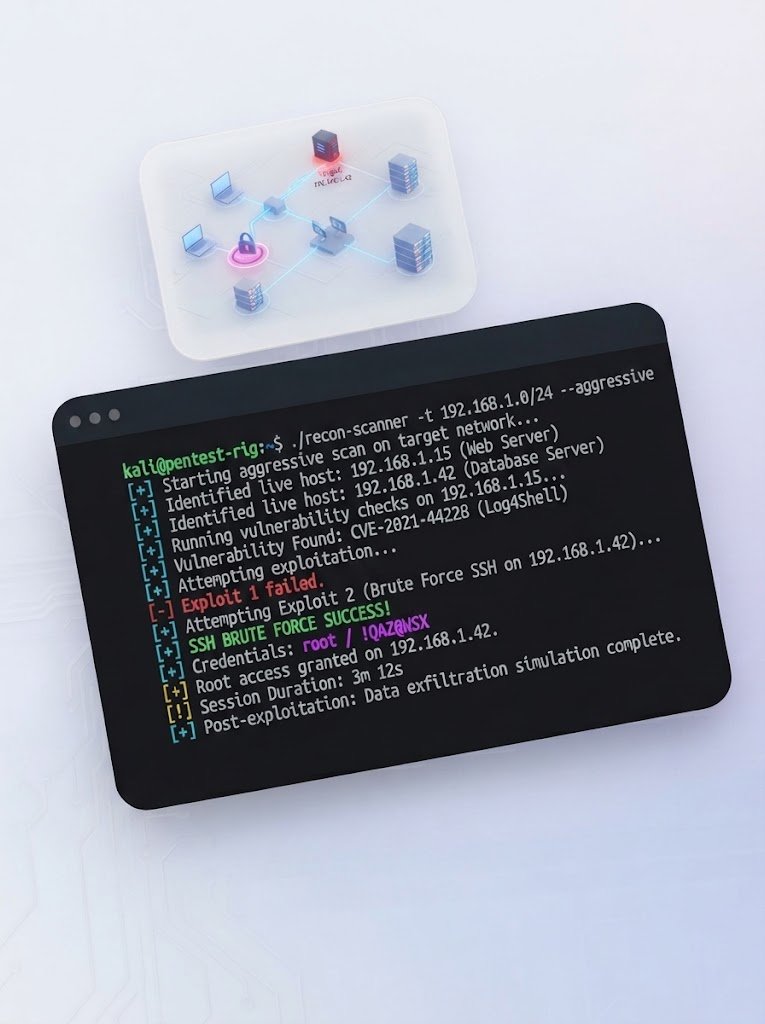
Identify vulnerabilities before attackers do with professional penetration testing services designed to assess your applications, APIs, networks, cloud environments and business infrastructure.
DevVibe provides penetration testing in Melbourne and delivers security testing services to organisations across Sydney, Brisbane, Perth, Canberra, Adelaide and Australia-wide. Our security-focused approach combines vulnerability discovery, controlled attack simulation, technical analysis and actionable remediation guidance to help businesses strengthen their security posture.
Assess security controls against relevant requirements and frameworks such as ISO 27001, SOC 2, NIST, ISM and PCI DSS, depending on your business and testing objectives.
Identify security weaknesses early while building secure applications, platforms and digital products that can scale with your business.
Test business-critical systems and customer-facing applications to uncover vulnerabilities that automated security scanners may not identify.
Evaluate complex infrastructure, applications, integrations and access controls across larger technology environments.
Security testing can help organisations identify weaknesses around systems handling sensitive information and support broader security and compliance objectives.
Test SaaS platforms, APIs, authentication mechanisms and multi-tenant environments before vulnerabilities affect customers.
Assess customer-facing applications, payment-related workflows, APIs and supporting infrastructure to reduce security risks.


Penetration testing is an authorised security assessment where trained security professionals evaluate systems, applications, networks or infrastructure to identify and validate security vulnerabilities.
Penetration testing pricing depends on the scope, number of systems, testing depth, infrastructure complexity and reporting requirements. A tailored penetration testing quote in Australia should be prepared after understanding the environment being tested.
The appropriate frequency depends on your industry, risk profile, technology changes and compliance requirements. Testing should also be considered after significant application, infrastructure or architectural changes.
A vulnerability assessment primarily identifies potential vulnerabilities, while penetration testing involves controlled attempts to validate whether identified weaknesses can actually be exploited within an authorised scope.
Yes. Web application penetration testing services can assess authentication, authorisation, session management, input validation, business logic, APIs and other application security areas.
Mobile application testing can cover both iOS and Android applications and their supporting APIs, depending on the agreed scope.
Yes. API penetration testing can evaluate authentication, authorisation, access controls, data exposure, input handling, rate limiting and API business logic.
Penetration testing can contribute to broader information-security risk assessment and security assurance activities associated with ISO 27001. However, penetration testing by itself does not make an organisation ISO 27001 compliant.
Security testing can provide useful evidence about technical security controls and help identify vulnerabilities relevant to a broader SOC 2 security program.
Penetration testing can form part of security assessment and risk-management activities aligned with applicable NIST guidance and Australian Government ISM practices.
Where applicable, penetration testing is an important component of PCI DSS security requirements. The exact testing requirements depend on the organisation’s cardholder-data environment and applicable PCI DSS scope.
Yes. DevVibe is based in Melbourne and provides security testing services to businesses in Melbourne and organisations across Australia.
Yes. Our services are available to Australian organisations, including businesses searching for penetration testing providers in Sydney, penetration testing in Brisbane, Perth and other locations.
The duration depends on the scope and complexity of the environment. A small application assessment may require substantially less time than a multi-system enterprise assessment.
Testing should be planned carefully to minimise operational risk. The rules of engagement should define testing boundaries, environments, permitted techniques and communication procedures before testing begins.